Is it too late for corporate treasurers?
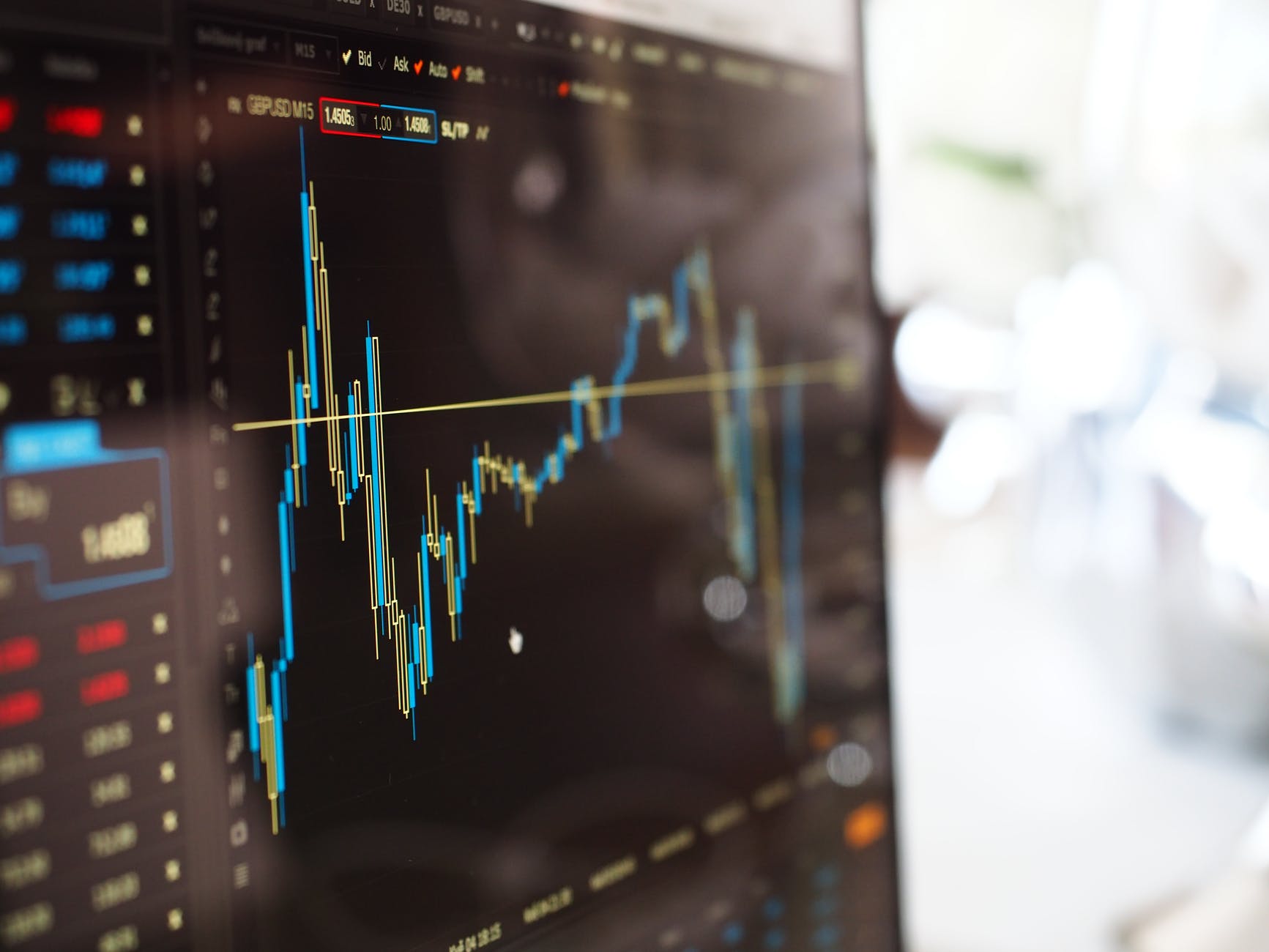
Low foreign exchange (FX) volatility has been on one of its longest runs in recent memory. The Deutsche Bank FX Volatility Index, an index that reflects the market expectation of future volatility, shows a steady five-year downward trend in volatility levels[1]. In January 2020, FX volatility hit its lowest level ever recorded after a phase one trade deal was struck between the United States and China[2]. These lows continued throughout February before ending abruptly in March amid economic fears due to COVID-19[3]. But what has this extended period of muted volatility meant for corporate treasurers and their risk management strategies?
Hill and McKaig outline two primary purposes of the FX market4. One is to convert a country’s currency into another country’s money, while the other is to provide protection against foreign exchange risk[4]. Multinational enterprises (MNEs) often earn revenues in currencies other than their home country’s. Unexpected changes in exchange rates can put pressure on MNE’s profits when funds are converted from one currency to another4. This risk can be avoided or minimized through hedging techniques. Corporate treasurers are responsible for developing and deploying an organization’s hedging strategy and there are several hedging techniques available to treasurers to insure against adverse FX movements4. The most common tool is a forward contract, an agreement between two parties that locks in an exchange rate for a specific amount of time[5]. This guaranteed rate acts as insurance and helps MNEs improve the accuracy of their budgets and achieve their earnings target.
With the recent trend in low FX volatility, hedging costs have become relatively cheap. Forward contracts (as well as options and swaps) are priced according to future expectations around currency movement. With expectations around volatility low, MNEs currently have access to inexpensive insurance, which may lead one to believe that this is an optimal time to hedge for the future. Unfortunately, the actions of multinational corporations have been precisely the opposite. In October 2019, the Globe and Mail reported that companies are undervaluing the level of FX risk they face6. The article goes on to say that despite recent fluctuations in the currency market, “corporate hedging appetite is light at best”[6]. A Bloomberg critique from December 2019 suggests that the abnormally long period of low volatility has made treasurers complacent[7].
There are varying opinions on why foreign exchange rate volatility is at a historic low. A piece published by Nasdaq points to the success of governments all around the world in reducing their current account imbalances as one of the main reasons for the reduction in volatility[8]. Smaller imbalances imply that there is less reason for money to flow from one country to another. Nasdaq also suggests that low inflation and low interest rates in G10 countries are contributing to the stability in FX rates8. Other sources propose that an increase in algorithmic trading has contributed to the low level of volatility9. The Financial Times article notes that algorithms use a mean-reversion trading strategy that keeps market misalignment to a minimum[9]. “It’s hard to argue that algorithms haven’t played a role” Mark McCormick, head of currency strategy at TD Securities, told the Financial Times9. What is more, FX trading algorithms are getting better at coping with economic calamities, according to Euromoney’s Paul Golden, who believes their use is here to stay[10].
If this trend appears to be sustainable, then why should corporate treasurers care about foreign exchange risk. Hedging strategies cost money, tie up funds, and reduce MNE’s ability to take advantage of positive swings in exchange rates. Perhaps this lack of hedging is a logical business move. As Financial Times reporter Eva Szakay points out, we only have to look to past periods of low volatility for indications of what might occur in the near future9. Low periods of volatility were seen during 1996 before the Asian financial crisis, and in 2007, before the global financial crisis. The cyclical nature of markets forebodes that an eventual rise in FX volatility levels is not a matter of if but when. Multinationals who are not adequately insured when this time comes will feel the sting in the form of reduced earnings and potential losses.
Some analysts believed this shift could be triggered by central banks attempting to raise interest rates[11]. However, this situation appears unlikely. While there was some attempt to raise interest rates over the last several years, below-target inflation levels caused the U.S. Federal Reserve to begin once again lowering rates in July of 2019[12]. Another potentially devastating trigger is what Nassim Taleb refers to as a Black Swan, a rare event that can cripple the global economy[13]. This event may have already occurred in the form of the COVID-19 global pandemic. In late February of this year, the coronavirus sent shock waves through the global economy as the stock markets reported their largest one-week loss since the 2008 financial crisis[14]. This jolt created the most significant jump in foreign exchange volatility seen in the last decade. From late February to late March, the Deutsche Bank FX Volatility Index went from historical lows to its highest level since the 2008 crisis. The U.S. dollar is seen as the currency of choice during periods of global economic volatility[15]. As a result, numerous emerging market currencies, including the Mexican peso and the Brazilian real, sank to their lowest levels ever as investors fled to U.S. dollars[16]. The volatility index has since decreased from its peak in March but has remained significantly higher than pre-COVID-19 levels due to continued uncertainty in the economy.
This new volatility has implications for businesses and their hedging strategy. Companies who were caught off guard in February may have underwhelming first-quarter results. Fortunately, it may not be too late for corporate treasurers to hedge against further increases in volatility. Many multinationals are reevaluating their currency exposure. On May 28, the Wall Street Journal reported that some firms are lengthening their hedging horizon, while others are increasing their positions[17]. Alamos Gold, a Canadian mining company, is doing both, increasing its Mexican peso position and simultaneously extending its timeline from 12 to 24 months17. The article notes that overly long positions can pose their own problems because a firm’s currency risk is often unknown past 12 months17. Other MNEs may need to hedge less, given this new uncertainty. With some industries all but shut down, companies may want to review their hedges and preserve cash17.
One haven for FX hedging could be the Chinese Yuan. The People’s Bank of China sets a daily reference rate for the country’s onshore currency (USDCNY), which loosely tracks the Yuan’s weight against a basket of 24 major currencies[18]. While foreign companies invest using the country’s offshore currency (USDCNH), the two do not differ much18. This referencing gives the Yuan stability and aids MNEs in doing business with China. However, this may not be an option for all multinationals, especially U.S. based firms. Trade tensions have reignited between China and the United States, as the phase one deal reached in January slowly falls apart[19]. Companies caught in the crossfire may have to choose a side. MNEs looking to reduce their reliance on China due to potential tariffs will not be able to rely on the stability of the Yuan. They will instead have to deal with the increased volatility in the FX market[20]. For these firms, foreign exchange hedging will become even more critical. In this new and uncertain time, it will be up to corporate treasurers to avoid complacency and develop new strategies that create value for their organization.
[1] V-Lab. (2020, June 1). Deutsche Bank FX Volatility Index AGARCH Volatility Analysis. NYU Stern. https://vlab.stern.nyu.edu/analysis/VOL.CVIX:VIND-R.AGARCH
[2] Potter, S. & Worrachate, A. (2020, January 17). Volatility in Currencies Worldwide Slumps to Lowest Level Ever. Bloomberg. https://www.bloomberg.com/news/articles/2020-01-17/volatility-in-currencies-worldwide-slumps-to-lowest-level-ever
[3] Reggiori, T. (2020, March 24). March forex daily turnover hits $2.3 trillion as virus fuels volatility: CLS. Reuters. https://www.reuters.com/article/us-global-forex-volumes/march-forex-daily-turnover-hits-2-3-trillion-as-virus-fuels-volatility-cls-idUSKBN21B172
[4] Hill, C. W. L. & McKaig, T., (2018) Global Business Today, Fifth Canadian Edition. McGraw Hill-Ryerson
[5] Riggins, N. (2019, May 16). How can treasury teams successfully manage foreign exchange risk in a volatile global environment? The Global Treasurer. https://www.theglobaltreasurer.com/2019/05/16/how-can-treasury-teams-successfully-manage-foreign-exchange-risk-in-a-volatile-global-environment/
[6] Ahmed, S. I. & Franklin, J. (2019, October 21). Currency Risk? U.S. corporates yawn. The Globe and Mail. https://www.theglobeandmail.com/investing/investment-ideas/article-currency-risks-us-corporates-yawn/
[7] Bloomberg. (2019, December 11). Is low volatility in the FX markets making corporate treasurers complacent? Bloomberg. https://www.bloomberg.com/professional/blog/is-low-volatility-in-the-fx-markets-making-corporate-treasurers-complacent/
[8] Gittler, M. (2019, November 8). Why FX volatility has been falling, and what to do about it. Nasdaq. https://www.nasdaq.com/articles/why-fx-volatility-has-been-falling-and-what-to-do-about-it-2019-11-08
[9] Szalay, E. (2020, January 2). Traders twiddle thumbs as volatility fades in currency markets. Financial Times. https://www.ft.com/content/4e6e495a-1b61-11ea-9186-7348c2f183af
[10] Golden, P. (2020, June 1). Adapt and thrive: how FX algos are coping with volatility. Euromoney. https://www.euromoney.com/article/b1lwbwhcnn3f76/adapt-and-thrive-how-fx-algos-are-coping-with-volatility
[11]. Gittler, M. (2019, November 8). Why FX volatility has been falling, and what to do about it. Nasdaq. https://www.nasdaq.com/articles/why-fx-volatility-has-been-falling-and-what-to-do-about-it-2019-11-08
[12] Macrotrends. (2020, May 29). Federal Funds Rate – 62 Year Historical Chart. Macrotrends. https://www.macrotrends.net/2015/fed-funds-rate-historical-chart
[13] Taleb, N. N. (2007). The black swan: The impact of the highly improbable (Vol. 2). Random house.
[14] Smith, E. (2020, February 28). Global stocks head for worst week since the financial crisis amid fears of a possible pandemic. CNBC. https://www.cnbc.com/2020/02/28/global-stocks-head-for-worst-week-since-financial-crisis-on-coronavirus-fears.html
[15] Reggiori, T. (2020, March 24). March forex daily turnover hits $2.3 trillion as virus fuels volatility: CLS. Reuters. https://www.reuters.com/article/us-global-forex-volumes/march-forex-daily-turnover-hits-2-3-trillion-as-virus-fuels-volatility-cls-idUSKBN21B172
[16] Smith, E. (2020, April 14) Emerging market currencies have been hit by the coronavirus, but analysts say it’s not all bad news. CNBC. https://www.cnbc.com/2020/04/14/emerging-market-currencies-have-been-hammered-by-covid-19.html
[17] Maurer, M. (2020, May 28). Weakening of Foreign Currencies Opens Up Hedging Options. Wall Street Journal. https://www.wsj.com/articles/weakening-of-foreign-currencies-opens-up-hedging-options-11590658201
[18] Trading Economics. (2020, June 3). Chinese Yuan. Trading Economics. Trading Economics. https://tradingeconomics.com/china/currency
[19] Johnson, K. (2020, June 1). China puts the final kibosh on Trump’s trade deal. Foreign Policy. https://foreignpolicy.com/2020/06/01/china-ends-trump-trade-deal-phase-one/
[20] Debnath, A. (2020, May 27). Currency volatility is a headache for companies reducing reliance on China. Bloomberg. https://www.bloomberg.com/news/articles/2020-05-28/companies-weaning-off-china-face-soaring-currency-hedging-costs
 PTRK
PTRK 